On Travelling


P1110774

I am currently journeying through Western Canada between Calgary and Vancouver, so a good opportunity to capture my thoughts on travelling.

I used to go on holiday, now I travel.

Going on holiday was primarily about taking a break from the routine of work;  resting, relaxing, maybe trying a new activity like snorkelling, drinking, eating different foods, reading, taking in the scenery – anything really which took me away from the daily grind.

I still relish all of the above but travelling has become so much more. Here are a few reasons why I love travelling:

  • Travelling makes me feel more alive. I tingle with expectation and the promise of new adventures I can experience through all of my senses.
  • Escape. Everyday life can be mundane, a routine. To escape from the norm, to do different things, to do things differently is refreshing and stimulating.
  • Expanding my mind. Soaking up local history, learning about different cultures, observing new customs, listening in on conversations, keeping my eyes and ears open. Learning, understanding, appreciating, adapting and changing. All of this means I expand my mind and grow as a human being.
  • Satisfying curiosity. I am curious abut others, I like to understand what makes others tick, I find human psychology fascinating. Travelling gives me the opportunity to discover more about others. It can be scary, moving me beyond what is comfortable but is rewarding at the same time.
  • Nature. Travelling provides me with the chance to see more of nature and learn about the natural world and the problems facing all forms of life. I love nature and to see different animals, insects, birds, flora and fauna brings me great joy and happiness.
  • Gratitude. Travelling brings a sense of perspective and gratitude. It helps me relish home and appreciate how lucky I am to call England my home. I love to travel, but I love coming home.
  • Learning to be me. Despite being beyond my middling years, I am still discovering who I am. Travelling provides me with many opportunities to experience new things and therefore to discover and learn about myself; what I think and feel and how I react and the choices I have when faced with a brand new experience or set of circumstances. It is interesting to discover new things about me when I have lived with me for so long!


When I travel, I think, I reflect and I ponder. I observe and I listen. I take it all in.  This is all great material for writing. I carry a note book with me wherever I go to jot down thoughts and new concepts. I write when I can, most days. Travelling allows me the freedom to explore in my mind (as well as in the physical world) and to be creative. Ideas flow and take shape. Some materialise into  scenes, snippets of writing, even fully formed short stories. Others germinate or take root to be picked up later when I’ve returned home.

Travelling is never dull.

Travelling is enriching and wholesome.

Travelling is freedom.

Travelling is a privilege and I am grateful to be able to do it.


LIHazleton.
Follow me on Twitter where I connect with other writers and all things writing. Follow me on Instagram if you love dogs and other animals.
On Point to Point Walking and the Road Less Travelled

P1030371


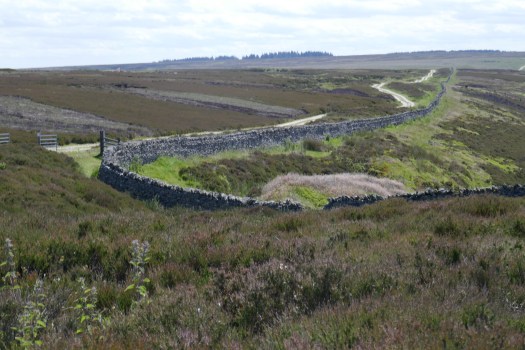
I recently embarked on a point to point walk following the Cleveland Way, a 177km (110 mile) long distance path. It runs between Helmsley, on the southern edge of the North York Moors National Park, to Filey on the east coast. It begins with classic moorland scenery, through forests and along escarpments and then follows a dramatic coastline running along the top of some of the highest sea cliffs in the country.

Point to point walking is a journey and walking daily on a predetermined route and towards an overall planned destination, I find both comforting and exciting. The health benefits of walking are well known but what is it about point to point walking that I find so appealing and enjoyable?

I relish the anticipation of the next day and a new destination. Each section of the walk reveals something new to observe and experience. Some would argue point to point walking is repetitive — why do the same thing day after day? But for me, no day is the same — there is always something new to see, smell, hear, touch, taste and feel. The balance of routine and experiencing the unexpected brings a fusion of security and adventure; I know what it feels like to walk, it is routine, but blended with a scary moment when the path turns into a scramble or goes through a field of bullocks, or l lose my way or see a view which takes my breath away, plus the bonus of a different place to rest my head each night — each day is a thrill.

On this particular point to point walk however, things went ‘wrong’. What do I mean by wrong? Wrong means I couldn’t continue — I fell ill.

When things happen to take you off-course, it’s important to remember self- awareness, to tap into the inner psyche and ask ‘whats going on’. This is never easy when your health is impaired by pain, discomfort, feelings of being unwell.

Adapting, reassessing, asking myself what do I need, what is best for me, reconnecting with my breath and going inside to discover the next the course of action, the new path — all of this helped to determine that to go home was what I needed to do.

Completing the Cleveland Way was not to be — I needed to follow a different path to that planned.

Point to point walking, following a pre-determined route is one thing, but what about when things ‘go wrong’, what then?

I am reminded of the book The Road Less Travelled by M. Scott Peck. I was given this book many years ago by my sister-friend — is it a spiritual classic, combining scientific and religious views to help personal growth by confronting and solving problems through discipline, love and grace. It is a book which encouraged me to look within and begin my own point to point inner journey of discovery. I have never looked back and unlike the Cleveland Way walk, my inner point to point journey will never end.

Using his experience from counselling many clients throughout his career, M. Scott Peck lays out a recipe for a fulfilled life that’s based on self-discipline, love, spirituality, and a mysterious force he calls grace. Mastering these is essential to maintain personal growth, he suggests, which in turn is key to a happy existence.

Here are 3 lessons from the first three categories he discusses:

  1. Stay open to change your perspective of reality at any moment.
  2. The action of loving is much more important than the feeling, which is fleeting.
  3. We’re all religious he suggests, because religion is nothing more than a distinct perception of the world.


What has all of this to do with writing and writing from emotional depth?

Learning to write creatively, learning to write from my heart, following the road less travelled and being myself and speaking my truth is enabling me to write from my centre, to find my own unique voice and style in prose.

I relish a plan and a pre-determined path, but I know when things go wrong (and they will), it is the ability to connect with my inner self and to not lose myself or my sense of my destiny that is the most important thing … more important than completing a point to point, pre-planned route.


LIHazleton.
Follow me on Twitter where I connect with other writers and all things writing. Follow me on Instagram if you love dogs and other animals.

On Yoga

0DA94C54-DC93-4D27-B3AF-29880DB75A1C


Yoga for me is a spiritual journey, but more of that in a future post.

Yoga is far more than exercise. It gives me an immense feeling of wellbeing and this is why I have a daily yoga practice, attend two classes a week and a monthly workshop. What is it about yoga that has gripped me and held my attention ever since the first class I attended in 2009? To help illuminate the reasons why I am so dedicated, here is a little bit of history.

I have consistently, since childhood practised sport; I played all the sports available to me at school and was in the school netball and badminton teams. As a young adult I played many other sports; hockey, volleyball, squash, tennis and table tennis. In my thirties I swam regularly, cycled (on and off road), did aerobics, circuit training and dabbled in running. I even took up scuba diving, clocking up over 40 dives in my log book. Then in my late thirties, I joined a running club.

I became obsessed with running. I improved, I entered races and became competitive. I discovered I was very good at endurance running. The longer the distance, the higher the endorphins took me. The feelings were euphoric. I was hooked and the running community became a significant part of my life, but I lost any sense of balance. Running was the only sport I was serious about and committed to. I still cycled occasionally and walked but running was my focus. I became obsessed about beating my times and targeted completing ten marathons. I fell short by one.

All of this running was to be to my detriment.

I have a vivid memory of my mother wagging her finger at me saying I would regret all the running in later life. She was right. In 2009 I began to have severe pain around my right hip, buttock and groin. Investigations revealed I had arthritis in the hip joint. My consultant said ‘if you don’t stop running, you will need a hip replacement within 3-5 years’.

Ten years later, have I needed to have a hip replacement? No. Have I stopped running? I still jog, does that count?! Have I stopped being obsessive about running? Yes. Am I still a member of a running club? No. Have I found a balance in the physical activities I take part in? Yes. What was the one thing that has benefitted me? Yoga. Do I believe practising yoga has kept my arthritis in check, prevented it from worsening and improved the overall mobility, strength and flexibility of my hip and my whole body? Yes. Do I believe if I had continued running and not discovered yoga I would have needed surgery or if not surgery, been in a lot of pain and discomfort? Yes.

So, what is it about yoga? Why am I a yogi?

Quite simply I believe I practise yoga for the benefit and health of my whole being — physical, mental, emotional, and spiritual. The World Health Organisation defines a healthy body as “complete physical and mental well-being.” Notice, there is no mention of fitness. All my life I have taken part in sport to keep fit, but by keeping fit I neglected the other parts of me and have suffered as a consequence. Practising yoga, I can look after and take care of all parts of me.

This is how:

Physical – Yoga postures strengthen and stretch my muscles, eases my joints and keeps them flexible. Yoga flow or vinyasa develops my stamina. The three S’s — suppleness, strength and stamina.

Mental – Yoga requires concentration, to move in and out of postures, synchronising and using the breath. I am learning how to still the mind with breath and meditation techniques.

Emotional – Emotions arise from thoughts. Yoga teaches me to begin to observe and control my thoughts thereby keeping in check my emotions.


How does this relate to my writing?

Like yoga, my writing has become part of who I am and what I enjoy doing. Like yoga, my writing is a daily practice and benefits aspects of my being. Both help me live a fulfilling life.


LIHazleton.
Follow me on Twitter where I connect with other writers and all things writing. Follow me on Instagram if you love dogs and other animals.


On Freedom and Security

poppies

This is the second in my ‘On … ‘ series — an opportunity to practice writing pure exposition.

Freedom and security — two words which when I unpick them, reveal (to me) how closely aligned they are. Let’s take them in turn:

Freedom 

What do I desire to be free from? Pain, loneliness, hunger, boredom, some other people, fear, worry, unpleasant surroundings, my own ego, anxiety, habits. I could go on.

Wanting freedom (to be free from) is a universal human desire. We also want to be free to … do, experience, be, say …

What do I desire to be free to do, experience, be, say? Travel, create, speak my mind, escape, move my body, choose. I could go on.

Life’s circumstances can prevent us from attaining freedom from and freedom to, but ultimately, I believe whilst I am alive, whilst I can breathe, I can have freedom, a freedom in my mind.

If I have my breath I have freedom. I am alive. Essentially, freedom is having a mind and being able to detach from it. We are not trapped by our body or our mind. True freedom comes from being self aware, knowing ourselves and the workings of our mind and how to detach from it and observe. We are not our body nor our minds, therefore we have freedom.

Victor Frankl was an Austrian psychiatrist who endured the horrific sufferings in Nazi concentration camps. With little control over his physical circumstances, he discovered his own deep sense of awareness and control over his mind. He was able to find freedom by transcending the misery, pain and suffering.  He says “Man does not cease to be an animal, but at the same time He is infinitely more than an animal. … Everything can be taken from a man but one thing: the last of the human freedoms – to choose one’s attitude in any given set of circumstances, to choose one’s own way.”


Security 

When unpicking security, in my mind I followed two strands of thought — on feeling secure and on being secure.

Feeling secure is a sentiment, and can be transitory and fleeting. Being secure suggests something different, something enduring and substantial. There is a dichotomy to consider though: the very things that help us to be secure are in themselves temporary — they have us feeling temporarily secure — because the very things that we believe help us to be secure can at any moment change.

Consider these meanings of security:

Free from apprehension

Free from danger

…. and notice the free from words.

I believe we can never be secure as we can never (in this life) be free from danger (or any of the other examples I gave earlier). Can we however be free from apprehension and therefore feel secure? Yes, if we can develop self awareness, observing our minds and finding:

  • acceptance of death
  • making our peace with suffering
  • being receptive to presence (the being with someone / something / some deity)
  • forgiving ourselves and loving ourselves


My belief is that freedom and security are not mutually exclusive and as human beings, we strive for both in our lives — I know I do — to provide the fulfilment we desire. I see security as the firm foundation for freedom. Think of Maslow’s hierarchy of needs — from the bottom of the triangle we have:

  • physiological
  • safety
  • love and belonging
  • esteem
  • self-actualisation

Security sits squarely within safely needs, but what about freedom? It is not explicitly mentioned within the famous diagram, but my belief is in reaching self-actualization as Maslow describes, it is akin to true freedom.

***


And my writing ….

I am currently exploring ‘writing lives’ and gathering material for my book. To explore how I feel about big themes like freedom and security helps me formulate and order my thoughts. Ultimately is it helping me discover who I am. This is useful when considering the subjects in my book; only when I can be clear about what I think and believe, can I place myself with another and consider their thoughts and feelings.


LIHazleton.
Follow me on Twitter where I connect with other writers and all things writing. Follow me on Instagram if you love dogs and other animals.


On Worry


P1030277

Worry is like toothache. When I succumb to it, I find it is impossible to ignore. It’s always there, lurking in the background waiting to explode. At other times it’s centre stage demanding my attention.

It’s a pain.

Worry drags me down, consumes me, chews me up and spits me out. I am fragmented, a kaleidoscope of the past and the future.  I am never in the present — the present moment passes by unnoticed. I am not self aware when worry has me in its vice. I am ruminating about something far away, something I cannot know, see, touch, smell, hear, taste. Worry is an enigma, a mirage.

Worry drains me, depletes me of energy. It resides in and around me. Magnified over and over it is bigger than the biggest thing.

Mental problems feed upon the attention you give them. The more you worry about them, the stronger they become. If you ignore them, they lose their power and finally vanish. 

Annamalai Swami


I have come to recognise that to worry endlessly isn’t worth what it costs me — tension, poor sleep, irritability, fatigue, problems concentrating and general unhappiness — let alone the hidden, unknown damages infiltrating my body.

Worry is a human condition, and as such it is part of us, we need it to survive, but excessive worry, beyond context, worry that grows to become like a toothache is both damaging and unnecessary.

I have learnt to remain alert, self aware and with this skill I can assess worry when it arises. I can question it, welcome it when justified or repel it if it’s not. How? By:

  • Calming my nervous system by practicing yoga and meditation or by engaging in engrossing creative pursuits like writing and painting
  • Noticing — my emotions, thoughts, feelings and staying curious about my motivations
  • Embracing uncertainty
  • Living in the present
  • Facing my fears
  • Staying connected to Nature


What about the writing?

This ‘On … ‘ series is me practicing writing pure exposition. I hope it will help me find ideas; one of the main engines to power my memoir. I hope it will help me find my voice; the power of my own unique way with words. This ‘On …’ series is not about writing scenes, showing events, writing narrative, writing dialogue, no, rather it is about me writing from my desk in the here and now, offering information, my opinions, ideas and analysis  i.e. expositional writing.

LIHazleton.
Follow me on Twitter where I connect with other writers and all things writing. Follow me on Instagram if you love dogs and other animals.
Love & Marriage

When I married my husband and searched for meaningful words to incorporate into our wedding ceremony, I found the perfect prose in Kahlil Gibran’s ‘The Prophet’, a book of 26 prose-poetry fables, originally published in 1923. This beautiful book has been translated into over 100 languages and has never been out of print.

Recently, I was fortunate to visit Melbourne’s Immigration Museum and an exhibition entitled ‘Kahlil Gibran: The Garden of the Prophet’, celebrating his life and work. Kahlil Gibran’s literary writings have inspired some of the most influential figures of our time; Indira Gandhi, Elvis Presley, John Lennon and David Bowie to name a few. As well as a literary creative, Kahlil Gibran was an accomplished artist, especially in drawing and watercolour painting.

Reflecting on our marriage and the love I share with my husband, I was thrilled to find on display under glass, the original typeset of the words we shared in front of our friends and family on our wedding day. A special, poignant moment for us as we re-read them together in the hushed, humbly-crafted environment in the inner halls of the museum.

Kahlil Gibran’s enduring legacy of art and literature resides in my heart and in the heart of many human beings. His message of spiritual unity and reconciliation touched me on my wedding day and continues to light my path.

***

The prose and the poetry I write may never be read, may never be published, but they are part of my legacy.

“For what is it to die but to stand naked in the wind and to melt into the sun?

And what is it to cease breathing but to free the breath from its restless tides, that it may rise and expand and seek God unencumbered?

Only when you drink from the river of silence shall you indeed sing.

And when you have reached the mountaintop,then you shall begin to climb.

And when the earth shall claim your limbs, then shall you truly dance.”
Khalil Gibran, The Prophet

P1110301


LIHazleton.
Follow me on Twitter where I connect with other writers and all things writing. Follow me on Instagram if you love dogs and other animals.
Compassion and Wisdom

fullsizeoutput_2f73

Compassion. Can you feel it? Wisdom. Do you cultivate it?

When I practise yoga and use my breath, I am in a moving meditation. When I sit on my yoga mat with an upright spine, allowing energy to flow and I use the breath as a tool to still my mind, I am meditating.

Today, I was given a gift. I was guided to the Tibetan Buddhist Society in Melbourne for their New Year Meditation Festival 2019.

I welcomed this opportunity to immerse myself in learning about Buddhism, having previous only dipped in to our local Buddhist’s centre at home in the UK and dipped out again. Today however, I took part in meditation sessions and workshops offered by the Tibetan Buddhist Society, including a delightful garden tour where I learnt how their garden reflects  the Buddhist’s principle of do no harm, where planting schemes are designed so plant-life and wildlife live in harmony.

In my life, I try to cultivate compassion — for myself, for other human beings, for all nature and for the universe. I feel drawn to Buddhism as a philosophy and a guide for living. I strive for wisdom — not wisdom as a result of learning, but wisdom gained through seeing the true nature of things.

In Buddhism, compassion and wisdom go together. I have learnt today if I practice meditation regularly, I will be able to cultivate more space in my mind, and distance myself from suffering. I have learnt compassion is an aspiration, a state of mind (or consciousness), a wanting of others to be free from suffering. It’s not passive — it’s not empathy alone — but rather an empathetic altruism that actively strives to free others from suffering. I have learnt genuine compassion must have both wisdom and loving kindness. I have learnt in order to have compassion for others, I have to feel compassion for myself. I have to develop self care and nurturing of myself.

***

How can I relate my experiences of today at the Tibetan Buddhist Society in Melbourne to my writing?

When I write from emotional depth, I feel a connection to myself. It is one of the reasons I write. Writing from a deep sense of myself, I feel compassion and I cultivate wisdom. Wisdom is to see and understand for myself, to keep an open mind rather than being closed-minded.

Compassion and wisdom are two strands in my life I am weaving together as I write and practice yoga (on and off the mat).


fullsizeoutput_2f75.jpeg


LIHazleton.
Follow me on Twitter where I connect with other writers and all things writing. Follow me on Instagram if you love dogs and other animals.

Making it My Own

P1100963

I attend two yoga classes a week, have my own daily practice and once a month I go along to a full morning’s yoga which includes teachings from Panjali’s Sutras, BKS Iyengar, Bhagavad Gita, the Upanishads and the concepts of the Chakras. Sound intense? Well not really. I make my yoga practice my own, take what I need, when I need it. I listen to my intuition. Yoga is a philosophy, a wisdom which grows with practice. It is more than a single life’s learning.

I began practicing yoga in 2009 when, after suffering severe discomfort in my right hip, I was diagnosed with osteoarthritis and advised by my consultant to “stop running or I would need a hip replacement within 2-5 years.” I sought a second opinion from a consultant who said, “don’t stop running, just listen to your body.” It was the best advice I ever received. Up until then, I had never listened to my body, nor my mind, nor my emotional intelligence (I wasn’t even aware I had one!) nor my spirit. I didn’t stop running, but what I did do, was take up yoga. My first weekly class, I still attend ten years on. In 2013 I picked up my second weekly class, a year later my monthly class and in 2016, I began my own daily practice.

Have I needed a hip replacement? No.

Yoga for me is a spiritual path. I practice daily because it’s who I am, it’s become part of me. Like my breath, I can’t live without it.

Yoga is not what I do on the mat. Yoga is a philosophy I practice. The word yoga  is derived from the Sanskrit root word “yuj”.  The most commonly understood meaning of yoga is union, oneness, bliss, with a simple basic premise that mind, body and spirit are all one and cannot be separated.

Ultimately, yoga is stilling the mind, the asanas (the ‘doing’ yoga on the mat) only a small part.

As the years have passed, I have discovered how to make yoga my own. Yoga is about a personal journey. It’s not about hitting the pose, the shape. It’s about listening to YOU.

fullsizeoutput_2f46


Now to the writing:

I am applying the principle of ‘making it my own’ to my writing. I am slowly developing my own authentic voice. I have been writing creatively since 2014 and much like yoga, writing has become for me who I am. I cannot not write.

I discovered creative writing at a time when I needed it, as with when I found yoga.

Making yoga my own and making writing my own help me discover who I am.


LIHazleton.
Follow me on Twitter where I connect with other writers and all things writing. Follow me on Instagram if you love dogs and other animals.


Managing Time

fullsizeoutput_2ee8


One second, one minute, one hour, one day, one week one month, one year, one decade. We all have time. What we choose to do with it, how we relate to it, who we choose to spend it with, where we spend it, what happens within us when we become aware it is finite and why we reflect on it, is unique to each of us.

I became aware my time is running out when my mother died in 2007. A significant event, many people share, but not everyone will respond to losing their mother, their father, or anyone else in their life, in the same way.

For me, losing my mother signified a watershed moment and time took on a different meaning. I began to change, to alter my life in significant ways. I recognised repeating  patterns that were no longer serving me and set about changing them. Of course, these changes didn’t happen over night. It is only now, twelve years on, I can say I use my time wisely, am aware of it passing and make decisions about my time to ensure my wellbeing always comes first.

How do you manage your time?

I manage mine so I can keep heathy in mind, body and spirit. I do this by attending to:

  • My connections with others; I nurture my friendships and all relationships, including my relationship with myself and with the natural world
  • Keeping active, taking exercise, moving my body; yoga, walking, cycling, power walking
  • Learning, developing, experiencing new things
  • Giving; by helping others I can help myself, as being kind, taking care of others, giving my time to others freely brings a sense of being valued, increases self esteem and generally make me feel good about myself
  • Noticing. I try always to enjoy the present moment and take notice, moment by moment. Although I find pleasure in reflecting on the past, sometimes it can bring pain. Similarly, looking to the future can bring an anticipation of excitement, but also can ignite fears, worries, concerns. Staying in the present, being mindful brings me peace and a sense of wellness
  • Making time for pleasures, things that bring me joy, like my writing


Managing my time to ensure I find time to write is essential for my wellbeing. It can be difficult, but little and often works best for me. I have discovered my optimum writing time is mid morning with a coffee by my side and usually is in a cafe. Finding time to think about my writing is as important as the physical task. I find this happens naturally, in quiet moments, usually when I am out walking, but often in the moments before sleep or on waking.

Pay attention to your time, manage your time, make the most of your time. It will soon run out.


LIHazleton.
Follow me on Twitter where I connect with other writers and all things writing. Follow me on Instagram if you love dogs and other animals.


Symbols


p1100879

“A symbol is the best possible formulation of a relatively unknown psychic content”, so says Jung

The dictionary says:

  1. a mark or character used as a conventional representation of an object, function, or process, e.g. the letter or letters standing for a chemical element or a character in musical notation.
  2. a thing that represents or stands for something else, especially a material object representing something abstract

***

I have a cousin who lives in Australia. Once a year I travel from the UK to see her. It’s symbolic. Symbolic of what?

My cousin recently bought me a beanie headband in the same design but in a different colour to the one she bought at the same time for herself. It’s symbolic. Symbolic of what?

Symbols have their own meaning for each of us as individuals. I know that my feelings / interpretations about these two symbolic gestures and my cousin’s interpretations will be different.

Any symbol (for example in a tarot reading) where there may be a generic answer is not likely to apply, feel aligned or be right for you.


p1100878


Symbols are a means of complex communication that can often have multiple levels of meaning. This differentiates signs from symbols, as signs only have one meaning. Human beings use symbols to express themselves and the social structure / culture to which they belong. Symbols facilitate an understanding of the world we inhabit and who we inhabit it with and are one of the bases on which we make judgements. We use symbols to make sense of the world and to identify ourselves living within it.

***

Now to the writing.

The use of symbols and symbolism is a literary device. I am learning to develop my own work by utilising forms of writing like metaphors and similes. This gives me freedom to add levels of meanings; literal ones that are self-evident and symbolic meanings which are far more profound. Using symbolism I hope to evoke an interest in readers far beyond the literal.

Using symbolism, I am mindful of the need to be subtle in my employment of the technique. The joy for me is in the intention of using symbolism. I may not get it right, the reader may not pick up on the symbolism, but for me this doesn’t matter. If they do, it is a bonus.


LIHazleton.
Follow me on Twitter where I connect with other writers and all things writing. Follow me on Instagram if you love dogs and other animals.